
The Last OCean, 2022
Part of Have Art Will Travel: Temporary & Traveling Exhibitions
In 2022, The Last Ocean made its debut at Burning Man’s Black Rock City. This remarkable installation delves into the urgent issue of plastic pollution in our oceans, a warming planet, the depletion of natural resources, and the pressing need for transformative systemic change.
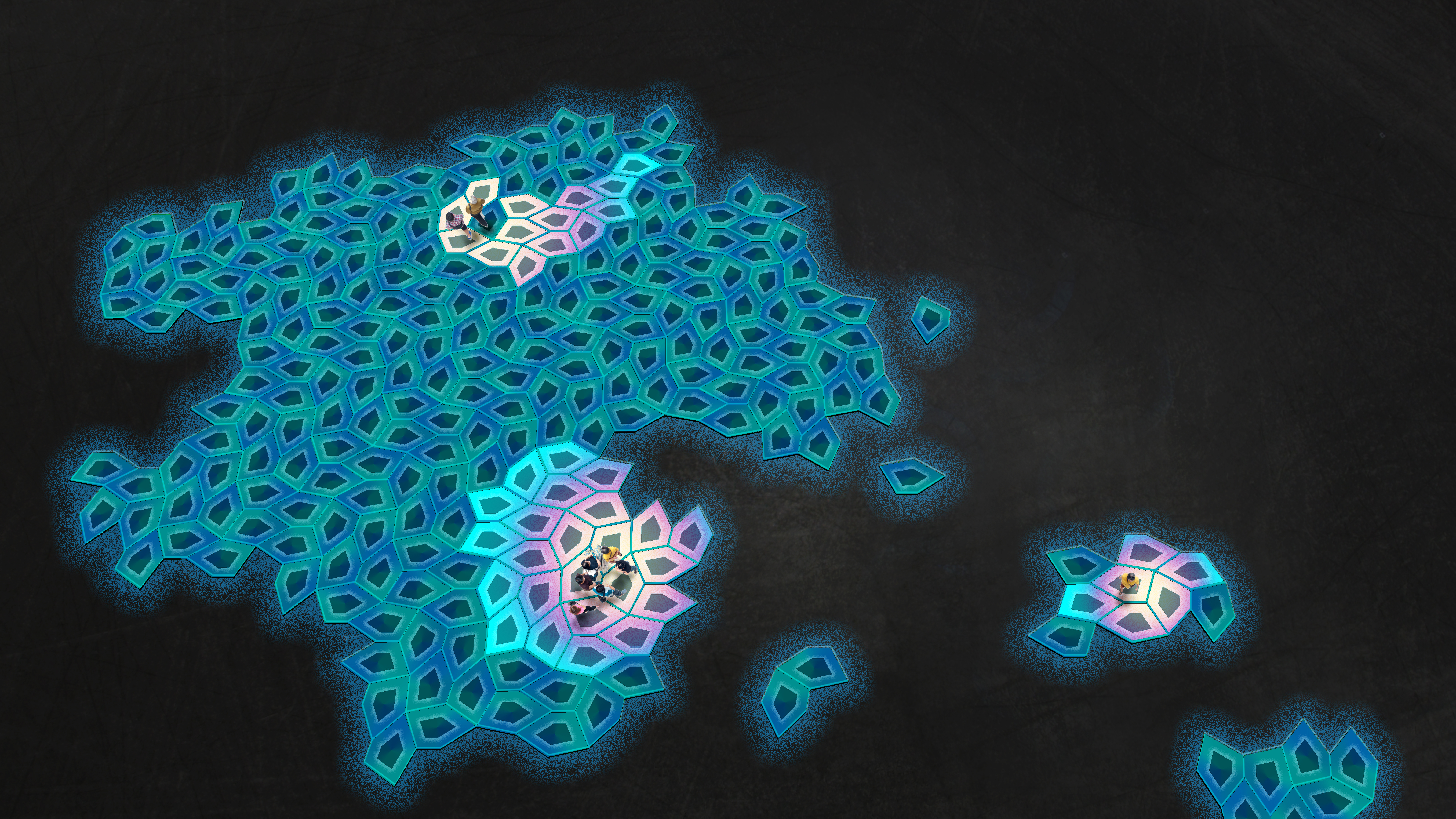
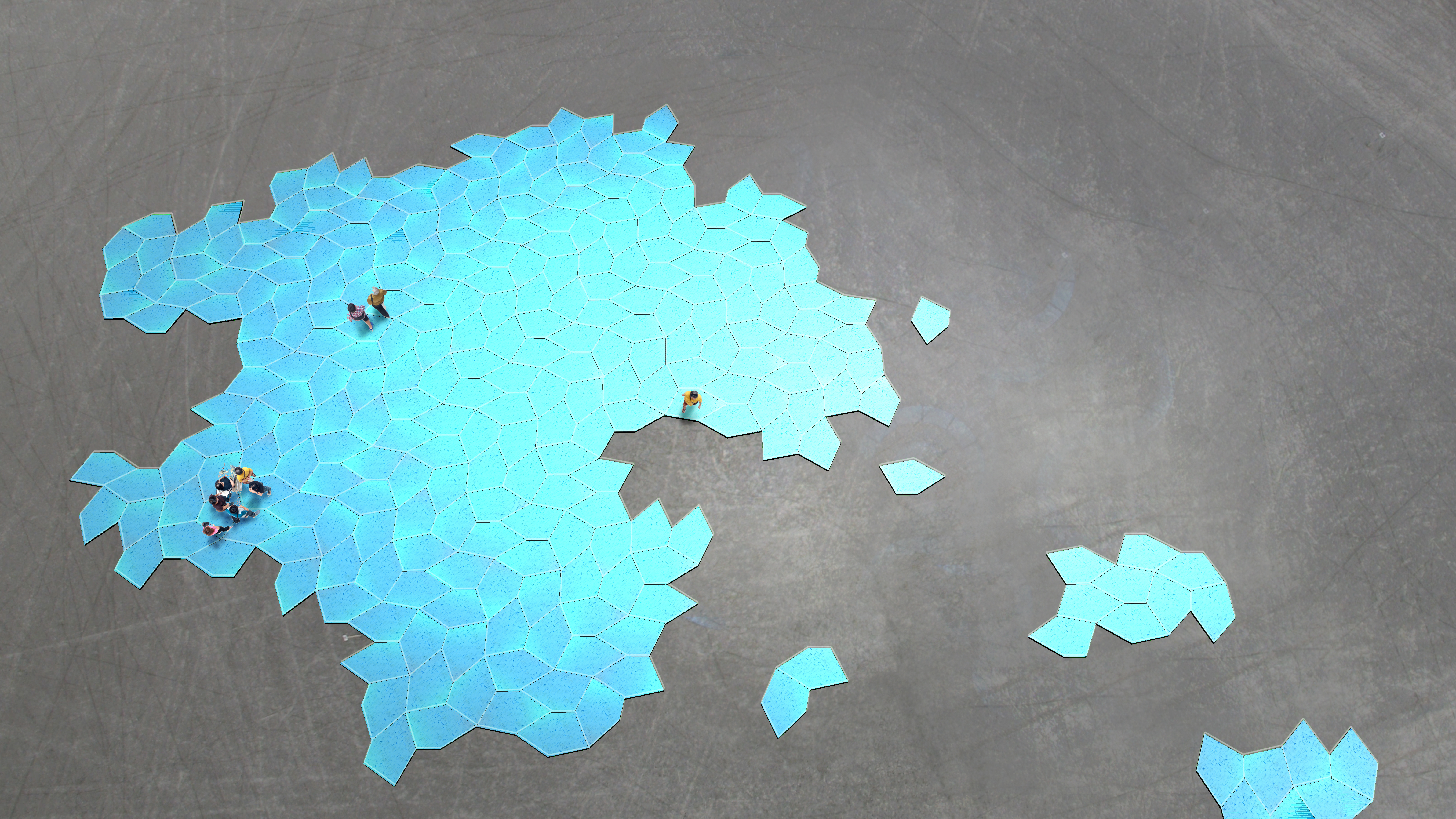
Comprised of traveling, temporary interactive platforms that span a vast landscape, the installation is brought to life by community engagement. Crafted from reclaimed ocean plastic, The Last Ocean creates an otherworldly ice field that mimics the geometric tessellations of Antarctica’s glaciers.
Throughout the day, the interactive platforms showcase the metamorphosis of reclaimed ocean plastic. And as night falls, The Last Ocean illuminates in a spectacular array of vibrant interactive light, captivating viewers with its stunning beauty and powerful message.
grants, awards & exhibitionS
2023
Vivid Sydney, Sydney, Australia
2022
Black Rock City Honorarium: Black Rock City, NV
2022
Detroit Design Week, Beacon Park, Detroit, MI
2022
Canal Convergence, Scottsdale, AZ
2022
San Francisco Exploratorium, San Francisco, CA


Process and Inspiration
The Last Ocean was conceptualized as an interactive sculpture inspired directly by John Weller’s photographs and his urgent call to preserve Antarctica’s Ross Sea. From its earliest vision, the work required a complete rethinking of materials and process. Lewin and her team designed, invented, engineered, and fabricated the artwork entirely from collected and reclaimed ocean plastic trash. This approach demanded the reinvention of aspects of Lewin’s art practice while pushing the boundaries of plastic manufacturing. The Last Ocean is an expansive landscape of interactive platforms created from reclaimed ocean plastic, evocative of a luminescent ice field composed of geometric tessellations. The work not only seeks to inspire and educate, but also—through the use of reclaimed ocean plastic—to contribute to the recovery of our oceans and our planet.
Rethinking Public Art
The Last Ocean redefines public artwork as an interactive landscape. The intention behind this work is to inspire and educate. As stated by Eriksen M., Lebreton, et al.: “We estimate that at least 5.25 trillion plastic particles weighing 268,940 tons are currently floating at sea.” We believe that humanity must ultimately put an end to the appalling levels of single- or limited-use plastic production. Yet with hundreds of thousands of tons of plastic already in our oceans, it is essential to address the crisis on multiple fronts.

Transforming Communities
To make this work possible, Jen Lewin Studio closely collaborated with Ocean Plastic Technologies (OPT) in South Africa. OPT and Jen Lewin Studio worked together to re-engineer the circular plastic economy by finding new ways to recycle and repurpose ocean-bound plastic pollution. The Last Ocean was handmade from collected ocean and ocean-bound plastic trash gathered from coastal communities, which was then ground down and melted to create the artwork.

Pioneering New Technology
The creation of The Last Ocean was a multi-year journey that required our studio to entirely re-think our own fabrication processes. We hoped that this hands-on exploration would inspire other artists, designers, fabricators, and plastic manufacturers to reconsider their own direct role in the protection and conservation of our planet.
“There is no such thing as ‘away.’ When we throw anything away, it must go somewhere.” – Annie Leonard


From the kitchen table of Marjorie Rice
The shape and form of The Last Ocean was directly inspired by the Type 9 pentagonal tiling discovered by artist and mathematician Marjorie Rice. At the time of her discovery, there were only nine known pentagonal tilings, identified by mathematicians Karl Reinhardt, R. B. Kershner, and Richard James between 1918 and 1975.
In 1976, with no training in geometry beyond a general math course in high school, the 52-year-old Californian homemaker discovered four pentagonal tilings over the course of two years after reading a puzzle column on tessellations in Scientific American. Employing an elaborate symbolic system and hand-sketched studies, Rice developed her investigations, discovering these four new tessellating convex pentagons and nearly sixty additional never-before-seen tessellations—all in the spare moments she had at home when her husband and five children were at work and school.
After her discoveries, one additional pentagonal tiling was identified in 1985 by Rolf Stein, and the final pentagonal tiling was discovered in 2015 using computer algorithms (Mann/McLoud/Von Derau). To date, there are only fifteen total pentagonal tilings of the plane, a set confirmed complete in 2017 by Michaël Rao. Aside from the initial discovery by Karl Reinhardt, Marjorie Rice’s pentagons make up the largest portion of these tilings. The interactive platforms used to create The Last Ocean were fabricated in the shape of Rice’s Pentagonal Tiling “Type #9.”


